




By now, most of us probably have an analog bag, but have you dipped into those puzzle books, craft kits, and coloring books yet? If the answer is no, may we suggest a good place to start: needlecraft.
Of all the analog hobbies out there, taking needle to fabric is one of the best ways to lower your heart rate and stress hormones (hello, cortisol); boost mood and improve your emotional well-being; and enhance memory skills and other cognitive functions like problem-solving, concentration, and more.
According to experts, practicing a craft like cross-stitch or embroidery combines the use of fine motor skills, pattern recognition, and problem-solving, which gives the brain a positive boost while also releasing serotonin and dopamine for a sense of calm and happiness. What’s more, needlecraft can also be a great way to build your social connections, through in-person opportunities like community crafting groups and workshops.
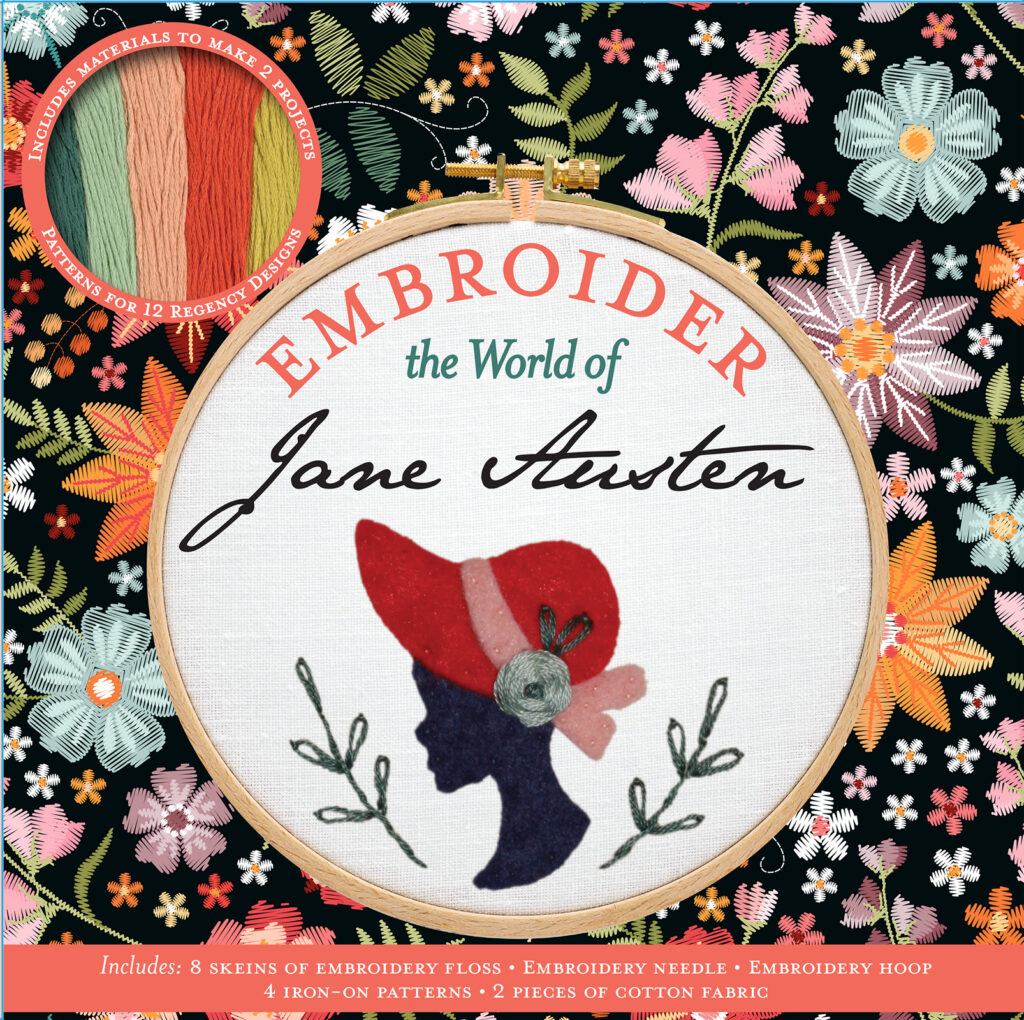
Ready to get started? We enlisted the help of @nerderbers_stitching, @mustard.thread and Aimee Ray, author of Embroider the World of Jane Austen, to give us some helpful beginner tips for your next cross-stitch or embroidery project.

Start your needlecraft hobby with Classic Disney Cross-Stitch!
Wash Your Fabrics
It helps to wash chemicals out of your new cloth before you start stitching. This extra step will also help keep your embroidery creations beautiful for years to come.
Place Fabric in the Hoop
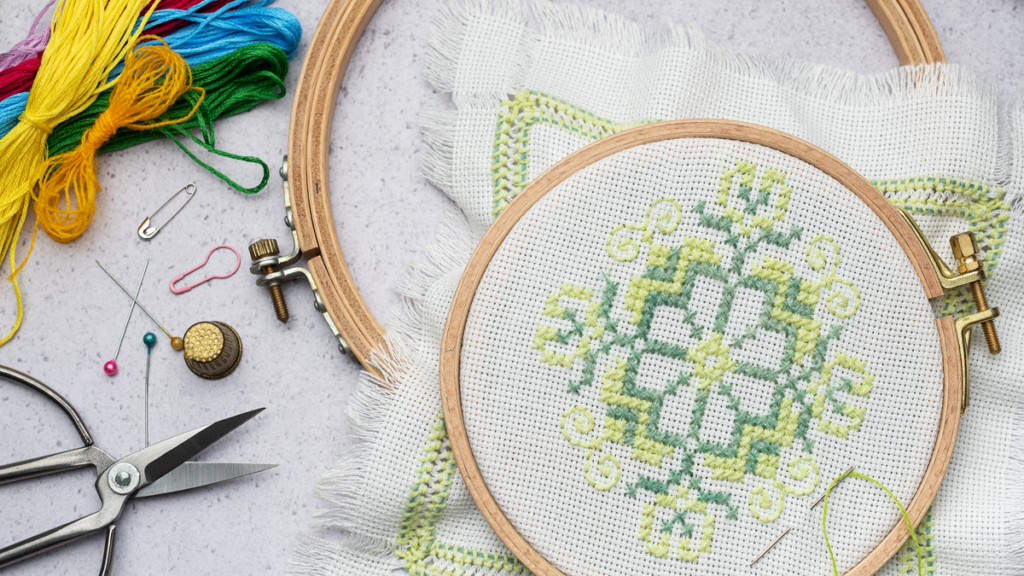
Loosen the screw at the top of the hoop, place the inner hoop on a flat surface and center the fabric on top. Then, press the fabric along the sides and place the outer hoop on top. Secure by tightening the screw. Depending on how think your fabric is, you may need to loosen your hoop more to ensure the fabric will fit.
Trace the Design
With the fabric secured, place the hoop over the pattern and lightly trace the design onto the back of the fabric using a pencil. This will give you an easy-to-follow guide as your are stitching.
Separate Floss Strands
Floss is made up of six strands of thread, however you only cross-stitch and embroider with one to three strands, depending on the thickness of your particular project. After you’ve cut your thread, carefully pinch one strand between your fingers and gently pull to release that strand from the others.
Catch the Cross-Stitch “Tail”
As you begin your first cross-stitches, be sure to leave a tail and don’t pull the thread all the way through so you can stitch over and secure that thread as you stitch. Once secure, be sure to snip the tail thread so it doesn’t get tangled in your stitch’s path.
Know Your Stitches
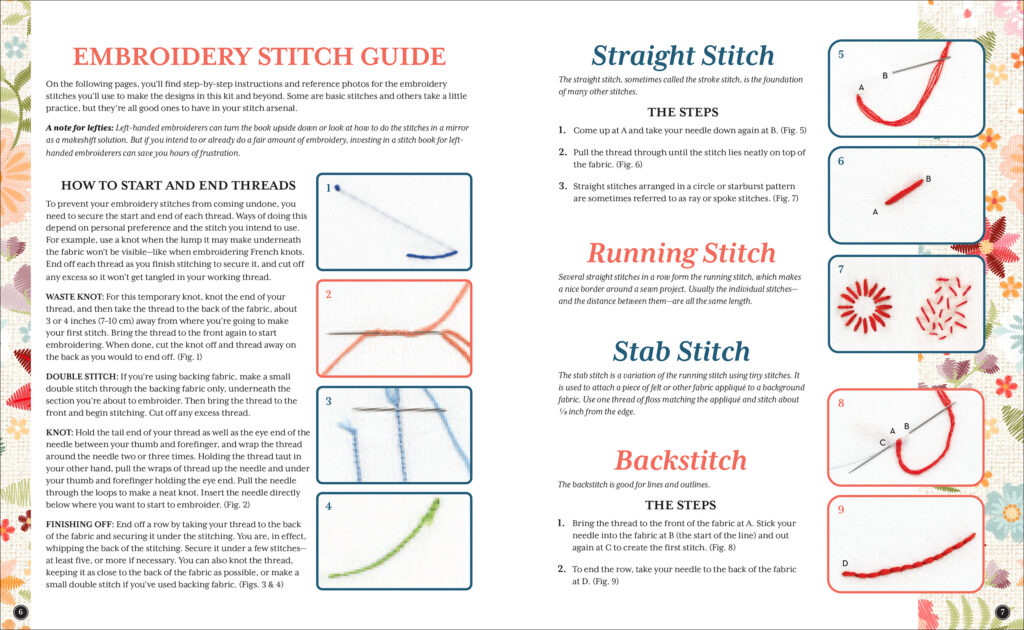
Aimee Ray, author of Embroider the World of Jane Austen, describes a number of needling stitches in her literary-inspired craft kit. There is the straight stitch, running stitch, stab stitch, and backstitch — just to name a few. There’s also knots (bullion and French), and the woven spider’s wheel (which, despite the scary name, makes lovely rose shapes).
For cross-stitch, the basics to learn are the full, half, quarter and three-quarter stitches, as well as a backstitch. Once you master these, it’s time to move on to specialty stitches, like satin, seed and long stitches, French knots, and specialty crosses.
Get an All-in-One Kit
Ray also recommends starting with a kit that includes everything you need to create your craft project: needle, hoop, fabric, floss, and step-by-step instructional guide.